

Instead of being driven by population growth, Vermont’s housing shortage is mostly fueled by shrinking household sizes (fewer people living in each home). Last year, VHFA highlighted the need to increase the pace of home building to 5,000-7,000 Vermont homes each year in the statewide Housing Needs Assessment. Even though estimates of Vermont’s recent population growth were modest at that time, longstanding housing shortages grew more severe.
The same conditions are largely in place one year later. Census Bureau population estimates suggest that our total population did not grow between 2024 and 2025, and in fact fell slightly by 0.3%.
Smaller households mean more homes are needed per person
The average Vermont household size fell from 2.4 in 2015 to 2.2 ten years later. This means that an average Vermont community with a population of 5,000 in 2024 would need 175 more homes than in 2015 to house the same number of people. Statewide, this means Vermont's housing stock needed to expand by 22,000 homes over the decade solely to accommodate shrinking household sizes among the existing population.
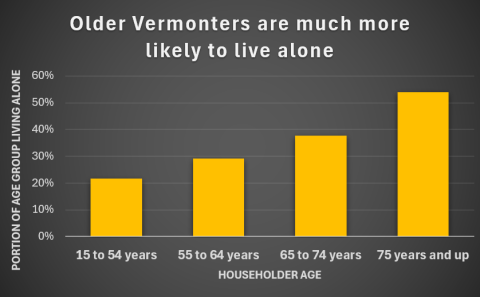
Declining household size is mostly driven by an aging population. Vermont has more people aged 55 or older than a decade ago, and they are more likely to live alone. The number of Vermonters aged 55+ is expected to continue increasing until 2045.
Housing market imbalances also fuel the housing shortage
Although rising numbers of households is the single largest driver of additional homes needed, three other market gaps also drive need: (1) low vacancy rates, (2) high rates of homelessness and (3) housing loss (typically due to disrepair). These factors comprise 20%-50% of Vermont's projected 5-year housing development need.
Projections in the Housing Needs Assessment were based on both a lower and upper scenario of household growth. The lower scenario uses the rate of household growth in Vermont in 2016-2019. During this time, Vermont had little to no population growth (averaging 0.5% per year) but experienced housing shortages that continue to contribute to the challenges today.
The higher growth scenario shows how Vermont could alter the course of its stagnant population trend. By building enough homes to meet potential new demand, Vermont would not only increase it’s population and moderate housing prices, but put long-term economic and social vibrancy in the Green Mountain State within reach.
Annual estimates of Vermont’s population differ
Identifying annual population changes is extremely difficult in small states like Vermont. The Census Bureau has two main surveys that estimate population in the years between a decennial census. Since neither source is based on a full count, these estimates should be used with caution. For example, the Census estimates that Vermont’s population between 2023 and 2024 either shrunk by 215 people or grew by over 1,000, depending on which Census estimate is used. Taken together they are consistent with Vermont's historical trend of little population change.
How do Vermont’s housing targets fit in?
After the completion of the 2025-2030 Housing Needs Assessment, the state of Vermont’s Department of Housing and Community Development set housing targets to encourage regions and municipalities to enable development of much needed homes. Housing targets became statutorily required in Vermont in 2023 by the HOME (Housing Opportunities Made for Everyone) Act (Act 47).
Based largely on trends that drive the housing needs described above, Vermont’s housing targets go a step further. They are intended to meet the short-term needs for additional homes as well as account for the state’s large number of vacation homes, create economic vibrancy, and counter demographic shifts that will otherwise leave Vermont’s aging population with clear contractions by 2050.