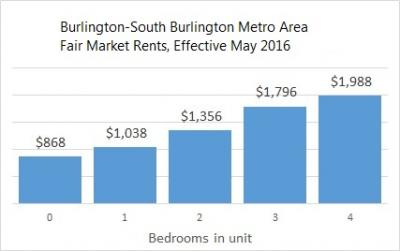
On October 1, 2016, the Fair Market Rents in every Vermont county will go up. Fair Market Rents
Fair market rents rise in every Vermont county
On October 1, 2016, the Fair Market Rents in every Vermont county will go up. Fair Market Rents
A steering committee of housing and service providers, state agencies and funding organizations is working to reduce homelessness and stabilize vulnerable populations. The committee’s current goal is to develop a system for facilitating service-connected affordable housing options, building local capacity, determining costs and identifying available and needed resources.
More than 30 percent of the households in Vermont’s rural counties are now cost burdened by their housing expenses—a stark increase since 2000, according to a recent Harvard analysis of non-metro areas nationwide. This interactive map shows the increase in cost burden rates sweeping U.S. rural areas.
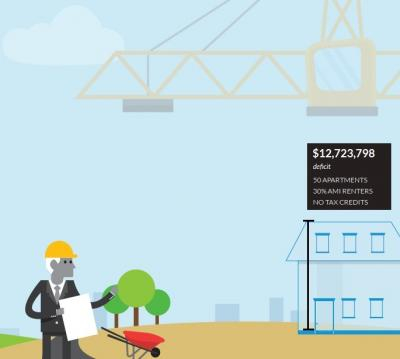
Ever wonder why it's not easier to build affordable apartments? A new interactive tool developed by the Urban Institute illustrates the mathematical necessity of tax credits, loans, tenant income/rent and grants in paying for the costs of affordable housing. Check it out to see if you can make the math work!
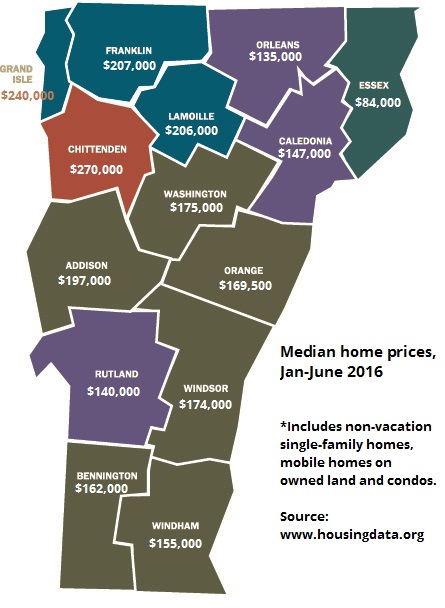
The median price of non-vacation Vermont homes sold during the first six months of 2016 was $200,000, virtually unchanged from 2015. Like prices, the number of sales also held steady compared to the first six months of 2015.

Lack of affordable housing is the community challenge that survey respondents are most concerned about, according to the recently released 2016 Community Health Needs Assessment. Among survey respondents, 58.3 percent rated lack of affordable housing as the top concern, followed by 52.5 percent for drug and alcohol abuse.
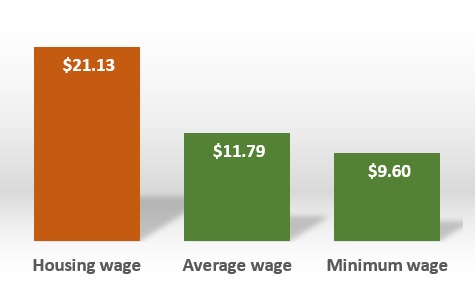
A modest, two-bedroom apartment costs $1,099, according to the annual Out of Reach report from the National Low-Income Housing Coalition.

Black and Latino mortgage applicants from New England continued to experience much higher denial rates than whites and Asians in 2013 and 2014, according to the Federal Reserve Bank of Boston’s recent study. The disparity occurred at every income level.
The number of homeless living in the U.S. who are over the age of 50 has jumped recently, and now comprises 31 percent of the nation's total homeless population, according to the New York Times.
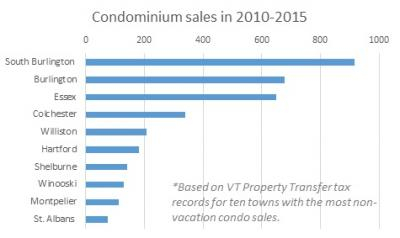
Although most non-vacation condominiums sold each year in Vermont are near Burlington, several towns in other parts of the state also play an important role in this segment of the housing market. About 80 percent of all primary residence condo sales in Vermont each year take place in 10 towns--7 inside Chittenden County and 3 beyond its boundaries.